Build Artifact Caching for Cloud-Native Agent Workflows
Speed up agent-driven builds with content-addressed caching.
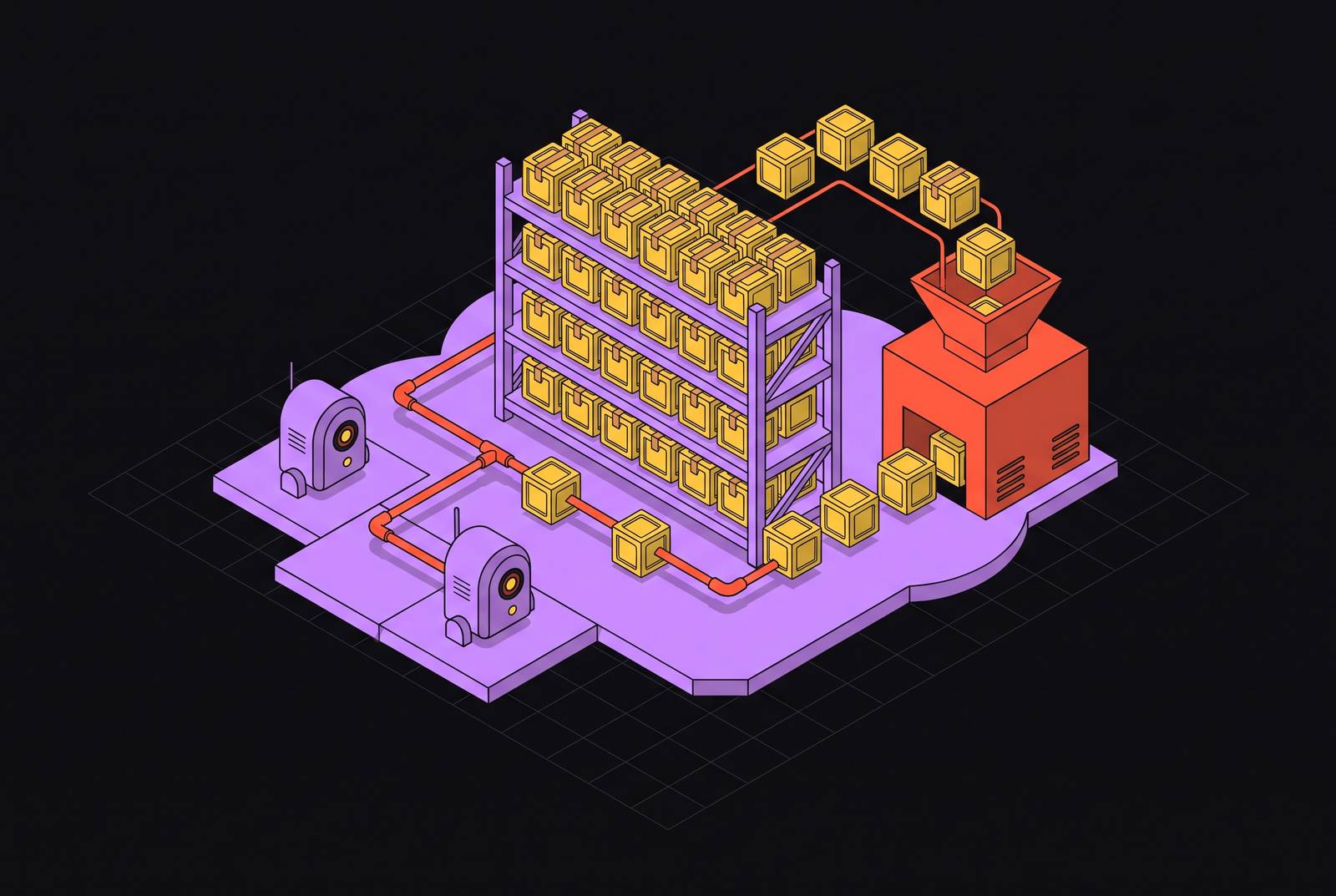
Build artifact caching for cloud-native agent workflows requires more than larger caches. It needs a design that keeps up with machine-speed iteration. Content-addressed keys, edge-local storage, selective invalidation, merge-queue integration, and provenance must work together so that faster code generation does not become slower, costlier, or less trustworthy integration.
Why build artifact caching assumptions break under agent-driven commit rates
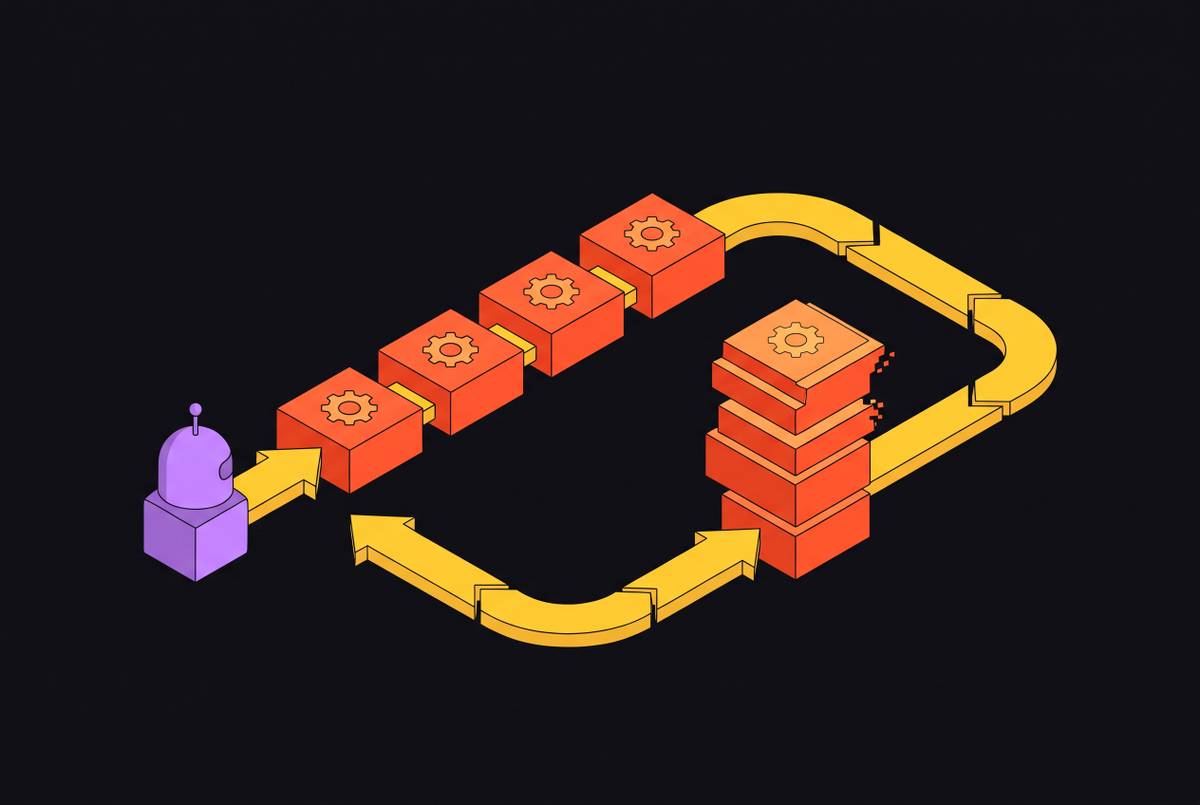
Human-paced caching assumes that the first push warms the cache and later pushes reuse it. That works when there is time between build invocations and most changes stay within a developer’s branch. Agents remove that interval from the design. Each cycle of interpreting a task, generating code, running tests, diagnosing failure, and revising is another build invocation. The pipeline may remain unchanged, but its arrival rate is now set by compute.
The change concerns both frequency and diversity. Agents generate tests, boilerplate, integration code, and new dependency choices, all of which place demands on CI beyond merely compiling another small edit. A cache warmed for one iteration may offer little help to the next agent’s work. Pipelines queue, leaving teams to encounter slower feedback and higher cloud spend before identifying the mismatch between the workload and the architecture.
How the three-tier cache model works and where agent volume breaks each layer
The first cache tier preserves dependency and toolchain setup, including the results of build environment initialization and build graph parsing. A hit skips that initialization. Dependency diversity weakens reuse at this layer. When agents introduce new packages as part of generated boilerplate, the setup cache warmed for one agent’s choices may not match another’s.
The computation cache stores build outputs under a cryptographic fingerprint of task inputs. A hit lets the system fetch the output without running the task. This tier has the most work that can be reused. Independent agents doing equivalent work can share results when the key identifies the same inputs, regardless of who initiated the build. Identical compiled outputs alone, however, are not what an input-keyed lookup compares, which makes the definition of those inputs decisive.
The third tier consists of edge nodes adjacent to build agents in the same network zone. These nodes serve artifacts locally rather than fetching each request from remote storage. Egress-shielding lets concurrent builds requesting the same dependency share one external fetch. Without that locality, concurrent demand still reaches remote storage even when the artifact already exists.
Ephemeral environments cut across all three tiers. They provide isolation and reproducibility but remove local state, so each build starts cold without an external cache. Regulated environments may have to use that isolation. The architecture must therefore support reuse across ephemeral boundaries.
Cache key design is the critical engineering decision that determines hit rate at agent scale
A lockfile hash is an effective key for repeated dependency setup when the lockfile remains unchanged. Runs that follow one another on the same branch can have near-perfect hit rates, but if the lockfile changes, there is no exact match. That distinction is simple at human cadence. Under agent iteration, frequent dependency changes turn it into a repeated boundary between reuse and cold setup, even while other parts of the build remain reusable.
Fallback keys soften that boundary by trying an exact match before restoring the most recent cache for the branch. This can improve reuse on actively developed branches at the cost of sometimes restoring slightly stale data. Parallel agent branches complicate the trade-off. A fallback based on branch history does not show that another agent’s cache has the inputs the current task needs, and branch-specific entries keep reuse split across development streams.
With hundreds of active branches, that fragmentation becomes cache thrashing. Valid entries can be evicted before downstream builds use them, so writing more to the cache may not lead to better hit rates later. The principled response is content-addressed computation caching. Keys based on cryptographic fingerprints of task inputs allow equivalent work to share an output across branches, rather than making branch identity a condition of reuse. The key must represent all inputs relevant to the task.
Docker builds apply the same concern at layer granularity. BuildKit cache export through --cache-to=type=registry places cache layers in a container registry for per-layer retrieval, providing meaningful build-time reductions after warmup for monorepos with many services. Layers that stay the same should be kept for reuse on their own. Ordering dependencies before source code keeps frequent source edits from displacing that advantage, while --mount=type=cache preserves package manager caches between builds without adding them to the final image.
Storage performance requirements for agent-driven cache infrastructure differ from human-first tooling
Correct keys cannot compensate for slow cache retrieval. Hundreds of concurrent agent build invocations require storage that sustains simultaneous reads and writes, rather than merely tolerating occasional developer pulls. Conventional artifact repositories were generally sized around more moderate concurrency, where seconds of retrieval latency could be acceptable. A tight agent retry loop instead needs sub-second cache resolution so that fetching saved work does not itself become the bottleneck.
Network placement changes the cost of a hit. A dependency fetched from a remote origin may take seconds or minutes, while an edge node on the same LAN or in the same availability zone can serve it in milliseconds. Concurrent demand makes that placement economically significant as well. When many builds request the same dependency, egress-shielding stores it once at the edge and serves later requests locally, so each build does not have to pay for its own external fetch.
Cloud-native agent workflows need API-driven, agent-addressable storage and lifecycle management. Local delivery does not remove the need for controlled artifact resolution. Cloudsmith’s artifact management guide describes central repositories as a way to establish explicit trust boundaries and eliminate resolution ambiguity. That governance role complements edge delivery because fast retrieval is useful only when agents resolve artifacts from consistent, trusted sources.
Cache invalidation logic designed for human branches produces cascading redundant work in agent merge queues
A serialized merge queue turns build duration into an integration constraint. Each entry must pass CI before merging, so a fixed CI duration limits the rate at which the queue can drain. Agent-generated PRs can arrive faster than that rate. As arrivals get close to the service rate, queueing delays grow non-linearly, faster than the amount of work coming in.
A preventable miss makes the constraint more severe. If it triggers a full cold rebuild, every PR behind that entry waits through the added build time. Invalidation rules that were barely visible with a few active branches can consequently produce cascading redundant work under agent volume. The immediate symptom is a slow merge queue, but the underlying defect may be treating reusable computation as invalid whenever a new CI invocation begins.
Because of merge-group isolation, a PR that passed its checks may need validation again, even when it enters an empty queue. It does not make every prior computation obsolete. When the underlying task inputs have not changed, a well-configured computation cache can reduce check times from minutes to seconds. The queue therefore needs to communicate cache context to CI.
Agent retries amplify any failure in that connection. An agent told to get a PR merged may re-queue the same change over and over, using full CI runs without adding new work. The lesson for queue integration is to distinguish a cache-warm rerun from a genuine need to rebuild. An agent that can make that distinction avoids requiring human intervention for every retry decision while reducing needless demand on the queue.
The cache as an attack surface in high-throughput agent pipelines
A persistent cache is a shared attack surface, and a poisoned artifact can reach many downstream builds as agents use outputs at machine speed without human review. More builds also mean more external artifact fetches and more potentially untracked dependencies. The interval between contamination and downstream consumption can shrink to minutes, making speed an amplifier of exposure as well as productivity.
Reuse must be structured. SBOMs, artifact signing, provenance tracking, and attestation frameworks such as SLSA are becoming baseline expectations, especially in regulated sectors. These controls need a place in the build and artifact lifecycle rather than remaining documentation produced after optimization is complete. Signed artifacts and SBOM documentation make the security requirement concrete, while provenance connects the artifact to the process that produced it.
The input fingerprint identifies the computation eligible for reuse, while the associated provenance records the source commit and build workflow identity. Together, those records make the relationship between inputs and outputs auditable. A fingerprint is not a substitute for those records or for artifact signing, but it gives them a precise computation identity to reference.
Hit and miss telemetry treated as a first-class signal gives platform teams visibility into stale or anomalous entries and supports the detection of cache poisoning. Audit trails then connect operational investigation with compliance needs. The architecture can preserve fast retrieval without making the origin of cached work opaque, which resolves the tension more effectively than forcing each build to fetch and compute everything again.
What a caching strategy designed for agent workflows actually looks like end to end
For platform engineers, the implementation should begin with content-addressed task keys. Dependency setup may still benefit from lockfile-based matching, but task outputs need fingerprints that describe their full inputs. This separates reusable work from branch bookkeeping. It also gives later layers a stable identity to use when serving artifacts, deciding whether a rerun is necessary, and recording how an output was produced.
Edge-local storage should follow when concurrency justifies it. Placing cache nodes in the same network zone as build agents reduces retrieval latency, while egress-shielding prevents simultaneous requests for a shared dependency from becoming repeated external transfers. When a PR returns with the same task inputs, it should reuse computation, and the queue should send CI enough cache context to tell that rerun apart from a case that needs invalidation.
Provenance belongs at cache write time. Each artifact should be associated with its input fingerprint, source commit, and build workflow identity, making attestation a natural output of the caching process. Hit and miss telemetry then provides a feedback loop across the design. Platform teams can use it to tune agent task specifications, dependency management, and key strategies according to the behaviors that actually permit reuse.
These layers should remain composable. Teams can adopt content-addressed keys first, add edge storage when volume warrants it, and embed provenance as compliance requires. API-driven access, agent-addressable infrastructure, and task-level observability let each layer fit the same operating model, so increasing agent activity can reuse prior work without surrendering isolation or traceability.