Jenkins Build Trigger Configuration for Agentic Pipelines
Agents need fast, structured feedback and bounded retries to close the code-generation cycle.
Jenkins build trigger configuration for agentic pipelines must close a feedback loop as well as start jobs. When an AI coding agent writes, tests, fixes, and retries its own changes, trigger timing and build evidence can advance or stall its progress. Reliable configuration must pair fast, actionable feedback with bounded retries, controlled access, and validation against the code that will actually merge.
Why build triggers behave differently when an AI agent owns the full task cycle
A human developer typically pushes a commit and waits for a verification pass. An agent instead consumes that result as input to its next action, diagnosing a failure, changing the code, and requesting another run. The build becomes part of task execution. A delay therefore interrupts the agent’s working cycle rather than simply postponing a notification to a developer.
That dependency changes what constitutes a configuration error. A schedule suited to human batch review can starve an agent of evidence, while unrestricted triggering can flood Jenkins with repeated attempts at an unfixable failure. Both failures happen when agent activity is treated like ordinary commit traffic. The configuration must account for a producer that can keep generating revisions without waiting for human attention.
What Jenkins contributes that agents cannot provide themselves
The Jenkins project distinguishes probabilistic code generation from repeatable verification. The same instruction can lead an agent to produce different code, but Jenkins applies the defined checks to each attempt. That provides evidence independent of the agent’s confidence. A passing build establishes only that those checks passed.
The Jenkinsfile also gives humans and agents a shared description of the delivery process. An agent can inspect an existing workflow or propose a pipeline change, while reviewers examine that proposal with the application code. Pipeline changes still require testing and review. Otherwise, an agent could alter the standard used to judge its own work.
Jenkins also connects those workflows to existing delivery environments. Teams still have legacy systems, multiple cloud providers, Kubernetes clusters, and specialized deployment procedures when they automate code generation. Its plugins let teams make those steps available through jobs and stages instead of building a separate integration for each agent. Jenkins also handles access controls and provenance, which matter more when people supervise less of the work.
The feedback loop Jenkins triggers must close for agents
The Jenkins project describes a workflow in which a trigger fires, the agent reads context, plans and acts, opens a PR, receives CI validation, and reaches human review. A failed validation creates a smaller loop within that process. Jenkins returns logs, the agent diagnoses the failure and proposes a revision, and Jenkins applies the same checks again. Each attempt needs an intelligible result.
For that cycle to work, trigger configuration must bring event granularity, feedback fidelity, and loop boundaries into line. Granularity means firing when the agent can act, whether on a commit, PR event, comment, or merge group. Fidelity means returning structured evidence that identifies a failure rather than forcing the agent to infer its cause from opaque output. Boundaries constrain retries so that self-correction cannot consume the queue indefinitely.
Speed alone cannot close this loop reliably. A quick failure with no diagnostic detail leaves the agent unable to choose a useful correction. But even precise evidence, if it arrives too late, leaves time for fewer correction cycles before a human steps in. These requirements govern both the event that starts a build and the pipeline that produces its result.
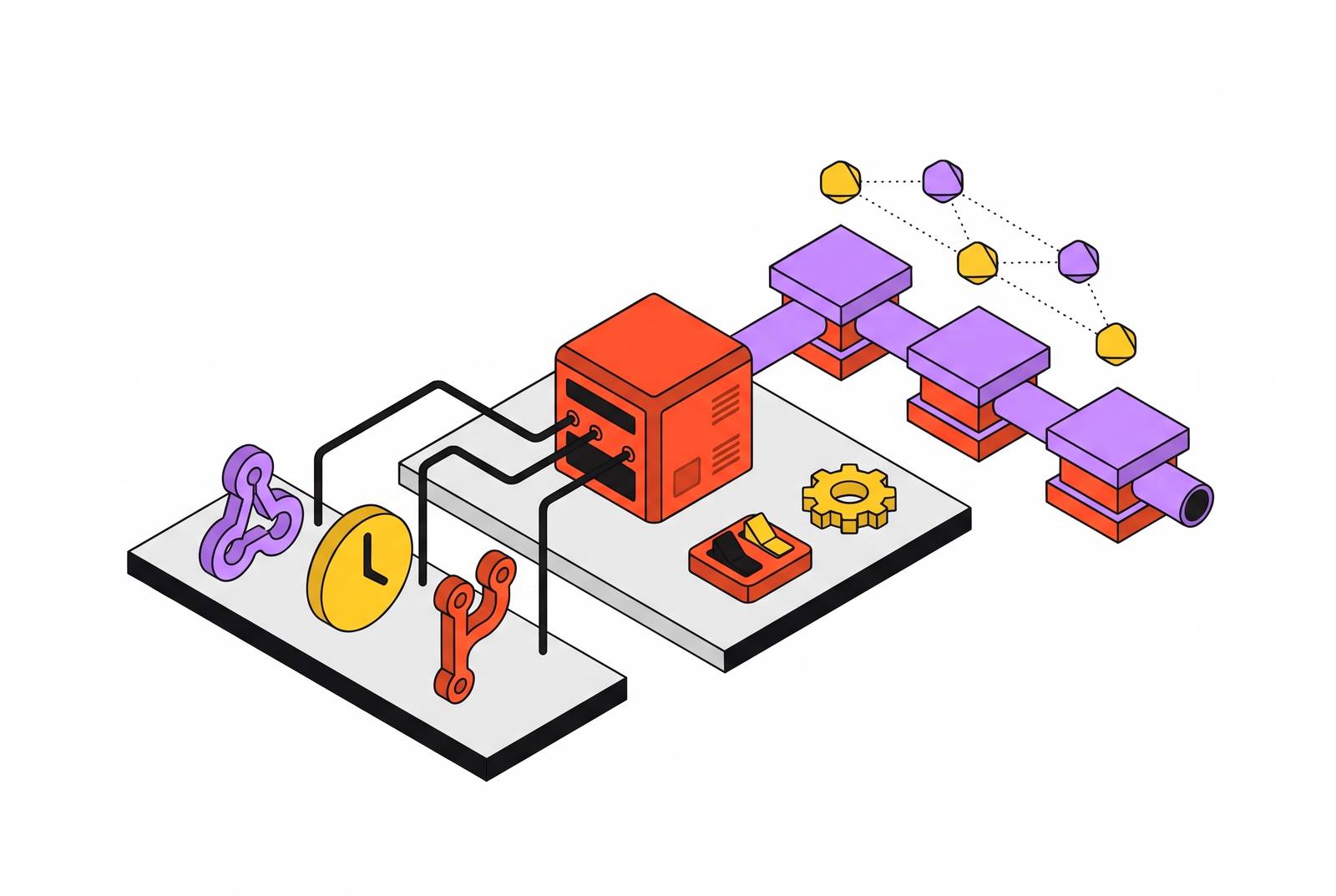
Jenkins trigger types and how each maps to an agentic use case
Webhook or SCM triggers are the primary entry point for iterative agent work because a push or PR event can start validation immediately. These triggers should target the agent’s branch or PR rather than main, keeping intermediate attempts out of main’s build history. The event needs to match the work. A PR comment trigger can request another build after a revised commit, but it should accept events only from authenticated agent identities or designated automation accounts.
Scheduled triggers serve a different purpose. They suit periodic validation or dependency scans that an agent reviews on a cadence, but introduce unnecessary delay when used for fix-and-verify work. Upstream job triggers instead connect stages of a larger process, such as code generation followed by integration testing. This keeps jobs composable without requiring every stage to share one Jenkinsfile.
Merge queue triggers address the final integration boundary. They request validation of the queued change against current main. CI must explicitly report on merge_group events for this path to work. Branch feedback and merge validation thus answer different questions, and each needs its own triggers.
Pipeline structure that returns fast, structured evidence to the agent
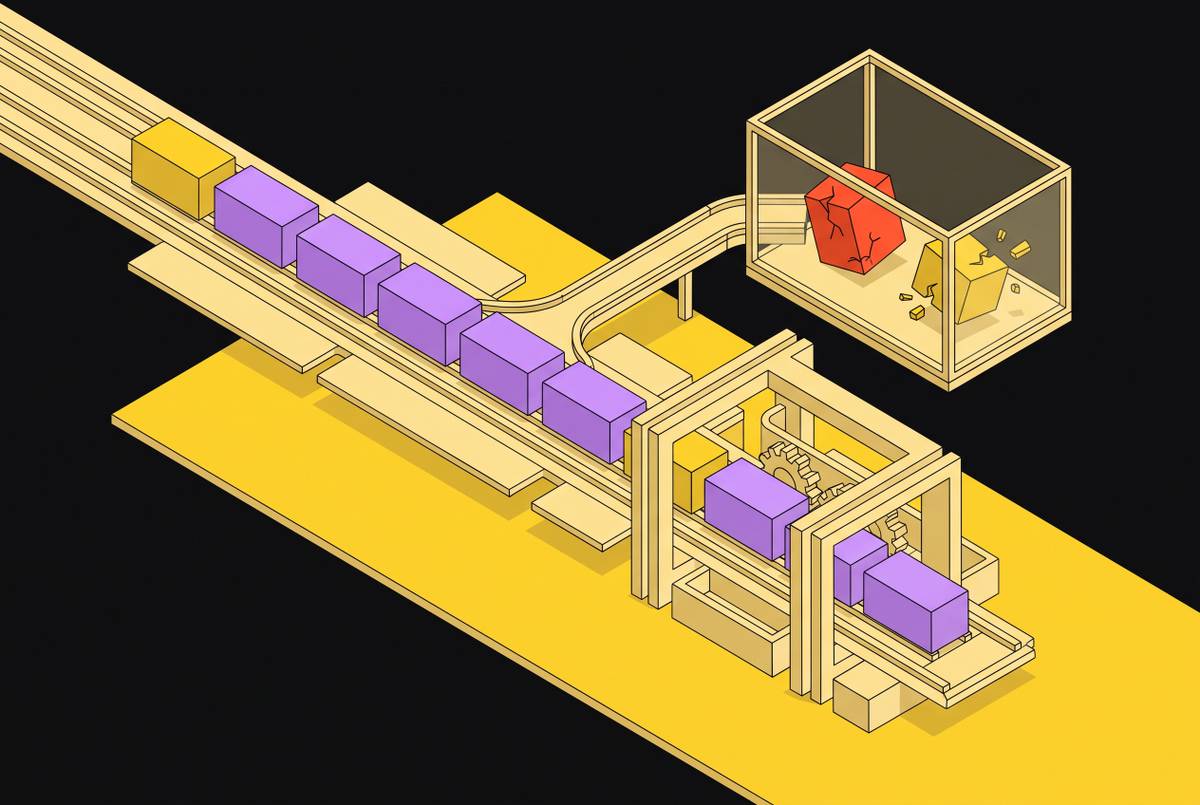
The Jenkins project recommends running fast, high-value checks in parallel with failFast true. Its pattern places compile and style checks beside unit tests in a Fast checks stage, followed by a Full test suite stage. A later Deploy stage is gated to main so that agent branches never reach deployment. Early failures return without waiting for the full suite.
Effective caching, targeted tests, and appropriately sized workers further shorten the interval between a revision and its evidence. The pipeline still needs full test and release gates before deployment, especially as more generated changes enter it.
The result must also represent the agent’s actual outcome. The AI Agent plugin fails a build when Pi Coding Agent reports a final assistant error or abort, even if the process exits zero. That safeguard prevents a successful process exit from becoming a false green signal.
Running coding agents directly inside Jenkins with the AI Agent plugin
The Jenkins AI Agent plugin, identified as ai-agent, provides a Run AI Agent build step for jobs and pipelines. Its supported agents include Claude Code, Codex CLI, Cursor Agent, OpenCode, Antigravity CLI, Grok Build, Pi Coding Agent, Oh My Pi / OMP, and Kiro CLI. Their telemetry support is not identical. Some provide full token and cost tracking, while others provide token tracking only.
Agent Type selects the executable integration, and a task instruction field supplies the task instruction. Optional Model and Reasoning effort settings override defaults, with supported reasoning-effort values taking precedence over the model suffix. A Setup script sets up tools or runtime settings before the agent runs, while Environment variables add values for each job. Standard checkout, triggers, credentials injection, post-build shell steps, and publishers remain available around the agent step.
Pipelines that use the removed agent must migrate before they upgrade. Approval support also differs between agents. Pi Coding Agent does not provide the plugin’s bidirectional approval channel, which constrains its use where tool calls require human authorization.
Approval gates, credentials, and audit trails as governance inside the agent loop
The plugin documentation places optional approval pauses before tool execution. This allows human judgment at a filesystem or network access boundary rather than imposing a pause at every commit or build step. YOLO mode, which skips confirmation prompts, is appropriate only in fully trusted, sandboxed environments.
The Jenkins project recommends giving agents only the permissions they need for their tasks and keeping untrusted changes away from privileged environments. Scoped credentials, secret-manager integration such as HashiCorp Vault, and artifact signing support those boundaries. Relevance AI warns that build server credentials should stay out of agent configurations. A fast feedback path does not justify widening access.
Draft-level operation, where an agent opens PRs and a human approves every merge, is the appropriate default. Specific workflows can move toward auto-merge as confidence grows for a given task type. Build records, source control, and provenance tooling link the change to the agent, pipeline, and resulting artifact. Those links support investigation and rollback when a change escapes the intended scope.
Queue saturation and resource limits when agents drive build volume
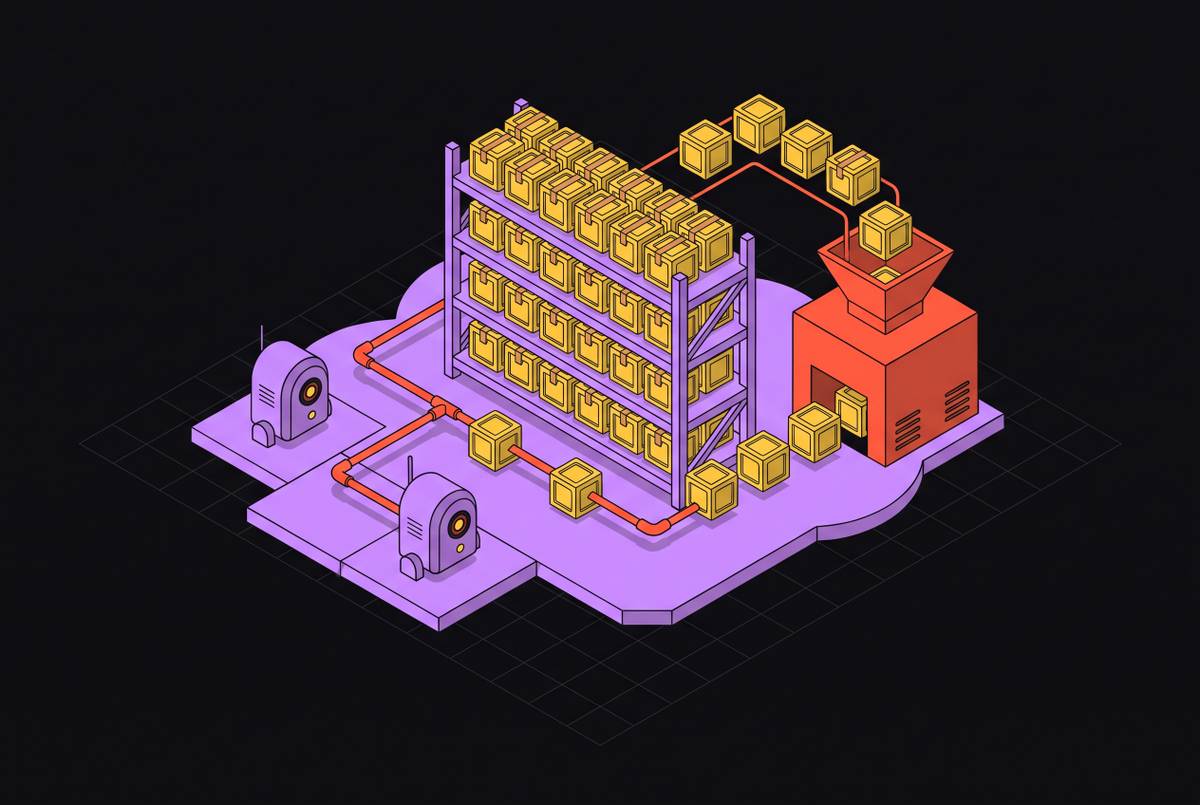
Fast iteration puts more load on build infrastructure built for the pace at which humans work. Relevance AI identifies build agent capacity and queue length as essential monitoring targets for automated triggers. Merge queues add another source of load because queued PRs require checks on temporary merge branches. Feedback latency can consequently shift from test execution to waiting for a worker. Slow tests, low coverage, and flaky checks become more exposed under that pressure.
The operational response is to size workers for agent-generated concurrency and set explicit limits on queued agent-initiated builds. Targeted tests in the first parallel stage lower the cost of each build and keep the full validation gate in place later. Controller JVM health, queue depth, and agent utilization should be tracked through observability tooling such as Datadog or Prometheus. Retry boundaries belong in the same capacity model. An agent cycling on an unfixable failure should not be allowed to exhaust the build pool.
Why the merge queue is the structural upgrade that makes agent-driven triggers reliable
A green PR does not guarantee a green main branch. Commits merged since the PR’s validation can change how its code integrates, making the earlier result stale. A merge queue closes that gap by testing the change against the latest code before merging. Without that validation, an agent can trust a result that no longer describes the integration state and create downstream failures requiring another correction loop.
This protection comes with operational friction. As of mid-2026, normal PR checks and merge queue checks remain tightly coupled in many setups, causing workflows to run twice without a clean native solution for merge-queue-only required status checks. Queue configuration must account for that extra work.
AI-augmented queue management can extend the mechanism through risk-based ordering, predictions of integration conflicts, and suggested batch groupings for parallel validation. These capabilities can reduce queue processing time. A separate queue layer can also resolve conflicts and triage CI failures, leaving decisions that need careful judgment to humans. The architectural benefit is separation of responsibilities.
Designing agent harnesses and transcripts so Jenkins triggers produce actionable signals
The plugin’s AiAgentTypeHandler extension model and AiAgentLogParser support structured transcript ingestion using JSONL. Transcripts capture assistant messages, tool calls with inputs and outputs, thinking blocks, and usage information where supported. This is a model for agent-facing pipeline output. Structured records give the next iteration explicit evidence.
The same records also expose weaknesses in the agent’s available skills. Repeatedly failing tool calls reveal different problems from tools that are never invoked, and both can guide changes to the agent’s setup. Unused skills are not necessarily harmless. Too many available tools can lengthen planning and increase irrelevant tool use, so transcript evidence supports removing capabilities as well as adding them.
Token counts, cost, and duration can help platform engineers distinguish productive work from inefficient cycling, subject to the selected agent’s tracking support. These signals connect individual tool choices to the resource pressure seen in Jenkins. These signals let engineers tune the loop based on records of what agents do.
What multi-agent coordination means for trigger configuration going forward
A trigger model built around one agent submitting one PR becomes restrictive when specialized agents produce concurrent change streams. A product manager agent translating requirements into specifications for implementation agents illustrates the coordination pattern. The pipeline then receives related work from multiple sources. Event scoping, parallel validation, and merge queue management must accommodate that concurrency.
To be ready, teams need comprehensive test coverage, machine-readable documentation of their architecture, and fast CI/CD loops. Those foundations let agents validate changes and understand the systems they modify. Components built for specific tasks and linked through thin integration layers can keep coordination, CI execution, queue management, and transcript analysis separate, with no need to put them all in one platform.
The software factory consequently deserves its own infrastructure layer. DevOps dealt with limits on deployment, while agentic infrastructure must deal with throughput limits that persist when code production and review depend on how much work humans can do. Trigger configuration is one part of that layer. Designing it around evidence, controlled execution, and concurrent integration now reduces the need to rebuild the pipeline under pressure as multi-agent workflows arrive.